Congressional Delegation to Japan
In my leadership role as Chairman of the Open-Source Intelligence (OSINT) Subcommittee, I recently led a U.S. delegation to Japan to engage with U.S. military commands and Japanese partner agencies. Our meetings focused on defense, deterrence, intelligence collaboration, and building partner capacity in the Indo-Pacific region to ensure a strong national security posture in the face of persistent threats from the Chinese Communist Party (CCP). As your Member of Congress, I will work tirelessly to support our Armed Forces, keep our country safe from constantly evolving and emerging threats, and put America First. Below you will find my report back that summarizes the work I did on behalf of the Intelligence Committee and Missouri’s 2nd District.
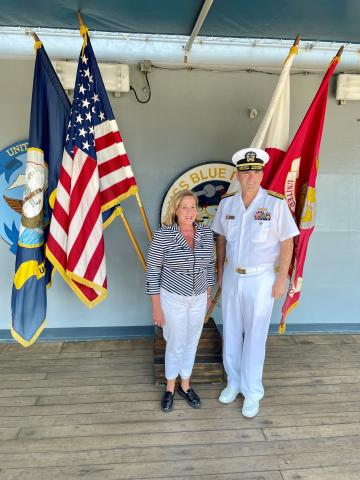
The destabilizing threat from the CCP is undeniable, and the brave men and women in our military overseas confront this challenge on multiple fronts. I boarded the USS Blue Ridge to meet with Rear Admiral Kyle Gantt, the Deputy Commander of U.S. Seventh Fleet. I toured the impressive command and control ship and met with many of the sailors protecting our nation. The fleet is a forward-deployed, combat-ready force designed to deter aggression and ensure the security of the Indo-Pacific region.
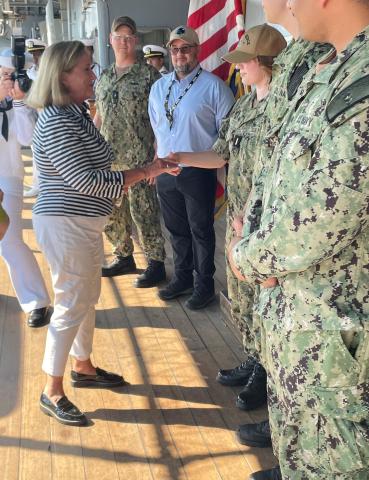
It was a privilege to meet four sailors and one Navy civilian from Missouri stationed aboard the USS Blue Ridge, the command and control ship of the U.S. Seventh Fleet. These dedicated men and women serve on the front lines of maritime security, protecting our national interests while countering CCP harassment of other nations’ vessels and attempts to dominate strategic waterways, such as the Taiwan Strait and the East and South China Seas. I am grateful for their service and sacrifice in defense of our freedoms.
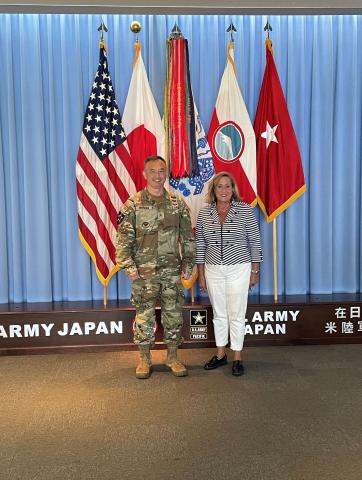
The headquarters for United States Army Japan (USARJ) is at Camp Zama, just outside of Tokyo, Japan, where I had an informative conversation with the Commanding General of USARJ, Brigadier General Dooghan. The base's mission is to support the defense of Japan and maintain peace and security in the Far East through readiness and strong bilateral partnerships. Soldiers stationed there participate in bilateral training with the Japan Ground Self-Defense Force.
Also hosted at Camp Zama is the U.S. Army Asian Studies Detachment, which is renowned for its open-source intelligence production and analysis. Last year, this Detachment received the 2024 Intelligence Community OSINT Unit of the Year Award, recognizing its exceptional impact to our national security. Japan is increasing its use of OSINT and will be hosting the International Open-Source Working Group this September. As the Chairman of the OSINT Subcommittee, I am working diligently with my colleagues in Congress to ensure this vital intelligence discipline matures as efficiently as possible to keep pace with our constantly advancing technological world.
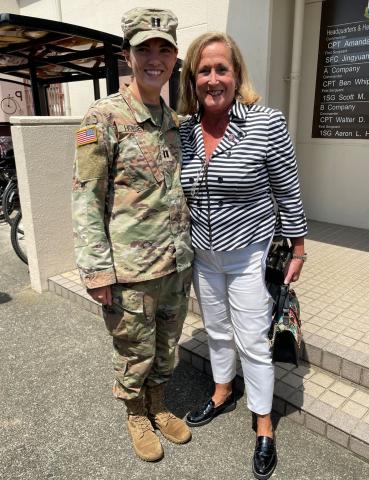
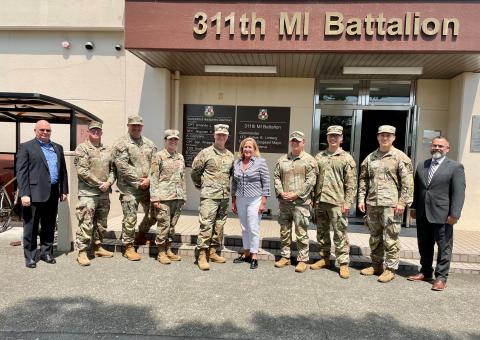
I was proud to meet Captain Amanda Horsey, Commander of “A” Company for the 311th Military Intelligence Battalion, a Missouri 2nd District constituent stationed at Camp Zama! Thank you for your service, Captain Horsey.
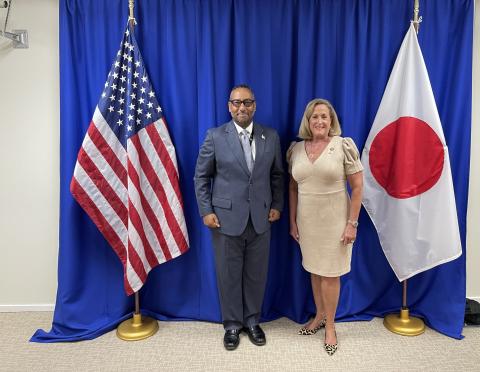
I was welcomed at our U.S. Embassy in Tokyo by Chargé d'affaires, Aaron Snipe. The country team provided incredible insights, highlighting that the government of Japan has committed to increasing defense spending to 2% of its GDP by 2027, breaking its post-war convention of limiting the budget to 1%. These are the most profound changes to Japan's security policy since the end of World War II, fundamentally altering its exclusively defense-oriented posture and underscoring the importance of defense and intelligence capabilities in the Pacific theater.
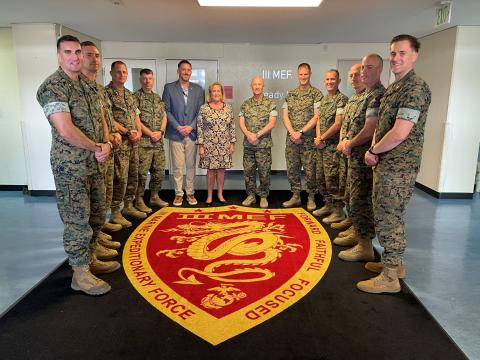
Brigadier General Robert Brodie of the III Marine Expeditionary Force (III MEF) also met with me. As a forward-deployed unit, III MEF's posture is intended to prevent a rapid Chinese invasion of Taiwan that could be completed before allied forces are able to properly respond. In such a contingency, these Marines would likely be among the first responders.
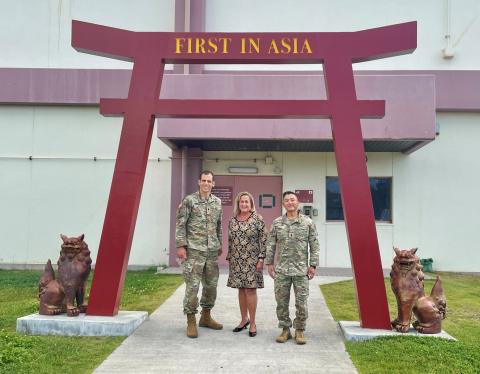
The U.S. Army's 1st Special Forces Group (Airborne) plays a key role in training, assisting, and cooperating with partner forces in the Indo-Pacific region. While the group's headquarters is at Joint Base Lewis-McChord in the State of Washington. I was grateful for the opportunity to meet with the forward-deployed battalion that is stationed in Okinawa, Japan. Battalion Commander LTC Anders Hamlin and Battalion Command Sergeant Major Jesse Hein provided an in-depth overview of the battalion’s critical mission in the region, particularly in the first island chain.
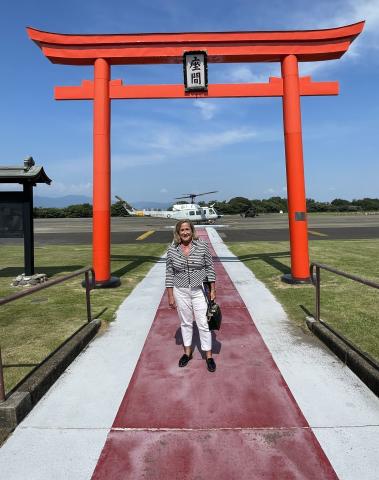
During my visit, the U.S. Air Force transported me aboard UH-1N Huey helicopters from Tokyo to Camp Zama and Yokosuka. It was a true honor to be among the final passengers on this aircraft’s last flights before they are decommissioned. Operating out of Yokota Air Base, the UH-1N Hueys have served the Air Force for over 60 years, supporting missions ranging from transport and search and rescue to nuclear missile site security.
I held a meeting with LTC Joshua Limberg, Commander of the 311th Military Intelligence Battalion, and his soldiers. Their mission spans the full spectrum of intelligence operations—including counterintelligence, human intelligence, signals intelligence, and open-source intelligence—across the U.S. Indo-Pacific Command area of responsibility. The battalion provides critical support to U.S. Army Pacific (USARPAC) operations, fulfills national-level requirements, and trains alongside partner units within U.S. Army Japan and the Japan Ground Self-Defense Force.
This crucial oversight of our military and intelligence assets in the Indo-Pacific is vital to the policymaking process in Congress. I was proud to express my support and gratitude to each of the soldiers, sailors, marines, and intelligence officers that have put their lives on the line to protect our freedoms. It is also incredibly important to hear their stories, the successes achieved, and the challenges face by our servicemembers in the region so we can ensure Congress provides both the necessary resources and policy reforms to support their mission.